Thymosin Alpha-1 10mg — Overview
Thymosin Alpha-1 (Tα1) is a 28-amino acid peptide first isolated in the 1970s from thymosin fraction 5, a thymic extract. It’s produced endogenously within the thymus gland and is central to T-cell maturation and immune activation. This synthetic version is chemically identical to the natural peptide and has been studied extensively as an immunomodulatory agent. In fact, it’s one of the most clinically researched peptides of its class, with trials evaluating its effects on viral infections, cancer, and various immunodeficiency states.
Mechanism of Action
Thymosin Alpha-1 works mainly by tapping into Toll-like receptor signalling pathways, specifically TLR2 and TLR9. When it engages these receptors on dendritic cells and other antigen-presenting cells, Tα1 kicks off the maturation and activation of T-lymphocytes, covering both cytotoxic CD8+ T cells and helper CD4+ T cells. It doesn’t stop there; it also ramps up natural killer (NK) cell activity and helps balance the production of pro-inflammatory and anti-inflammatory cytokines.
Tα1 doesn’t function as a blunt immunostimulant. It’s actually an immunomodulator that can ramp up immune responses when they’re flagging or dial back excessive inflammation when needed. This bidirectional nature is pretty rare among immune-active peptides, which is why it’s become such a focal point for immunology researchers.
Research History and Context
Thymosin Alpha-1 has a research history that’s unusually rich for a peptide. Clinical data spans several decades, covering trials for hepatitis B, hepatitis C, various malignancies, and more recently, sepsis and COVID-19. Meta-analyses of the hepatitis research base generally support its immunomodulatory efficacy in boosting antiviral immune responses. However, results tend to vary based on the specific disease context and the patient population being studied.
Researchers have mostly looked at Tα1 as a potential adjunct to conventional cancer therapies. The core idea is that boosting immune surveillance might help the body better recognise and tackle tumour cells. Even though findings are still a bit mixed and the field’s still growing, the mechanistic rationale is solid. Its relative safety profile has also encouraged scientists to keep investigating.
Comparison with Related Peptides
In immune biology research, Tα1 is frequently compared with other thymic and immune-modulating peptides. LL-37 5mg is a cathelicidin antimicrobial peptide that triggers innate immune activation. It operates at a more upstream, non-adaptive level than Tα1’s T-cell focus, so they’re useful as complementary tools to study different arms of immunity. Then there’s Thymosin Beta-4 (TB-500) 5mg. Despite the shared “thymosin” name, its profile is primarily structural and repair-oriented rather than immunomodulatory; they act through entirely different mechanisms.
For researchers investigating innate immune signalling, KPV 5mg provides a useful comparison. It targets melanocortin receptors and NF-κB pathways instead of TLR signalling, offering a different mechanistic angle on inflammatory regulation. Research teams also utilise Selank 10mg in combination studies because of its reported effects on IL-6 expression and immune-related cytokine profiles.
Format & Quality
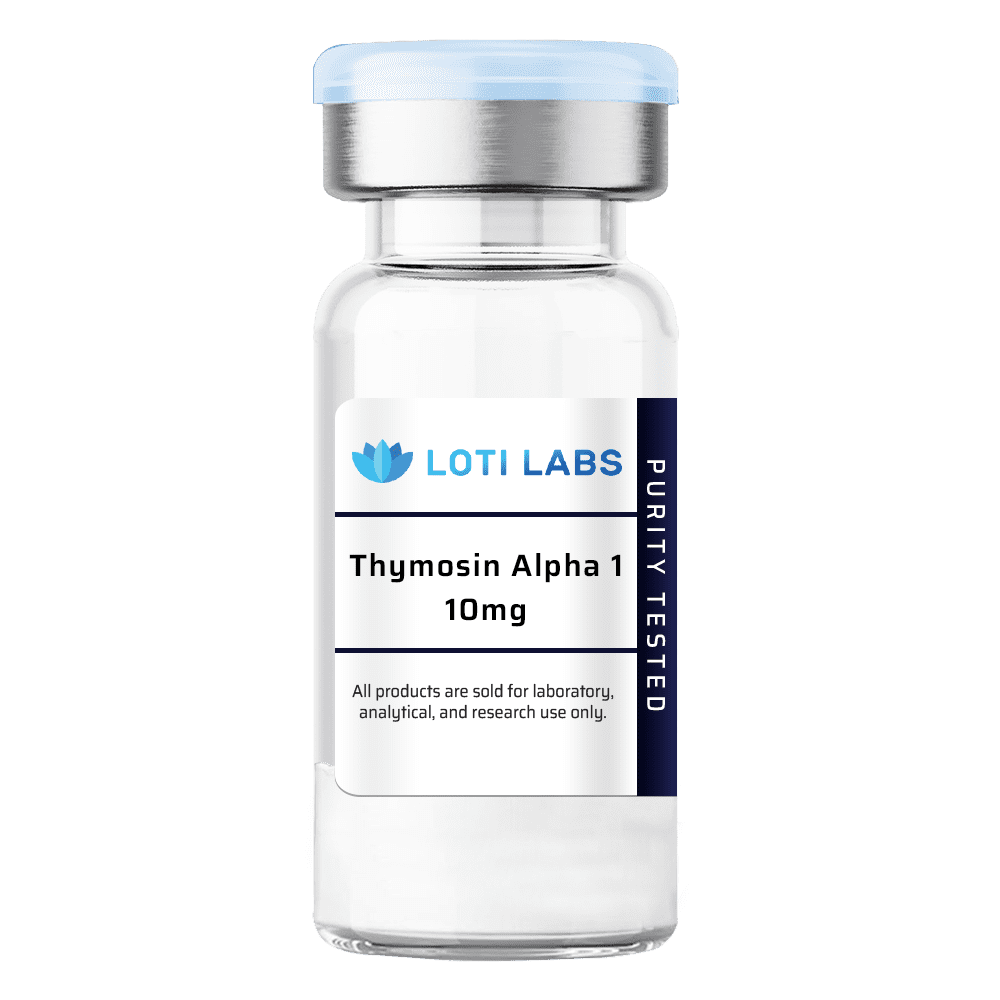
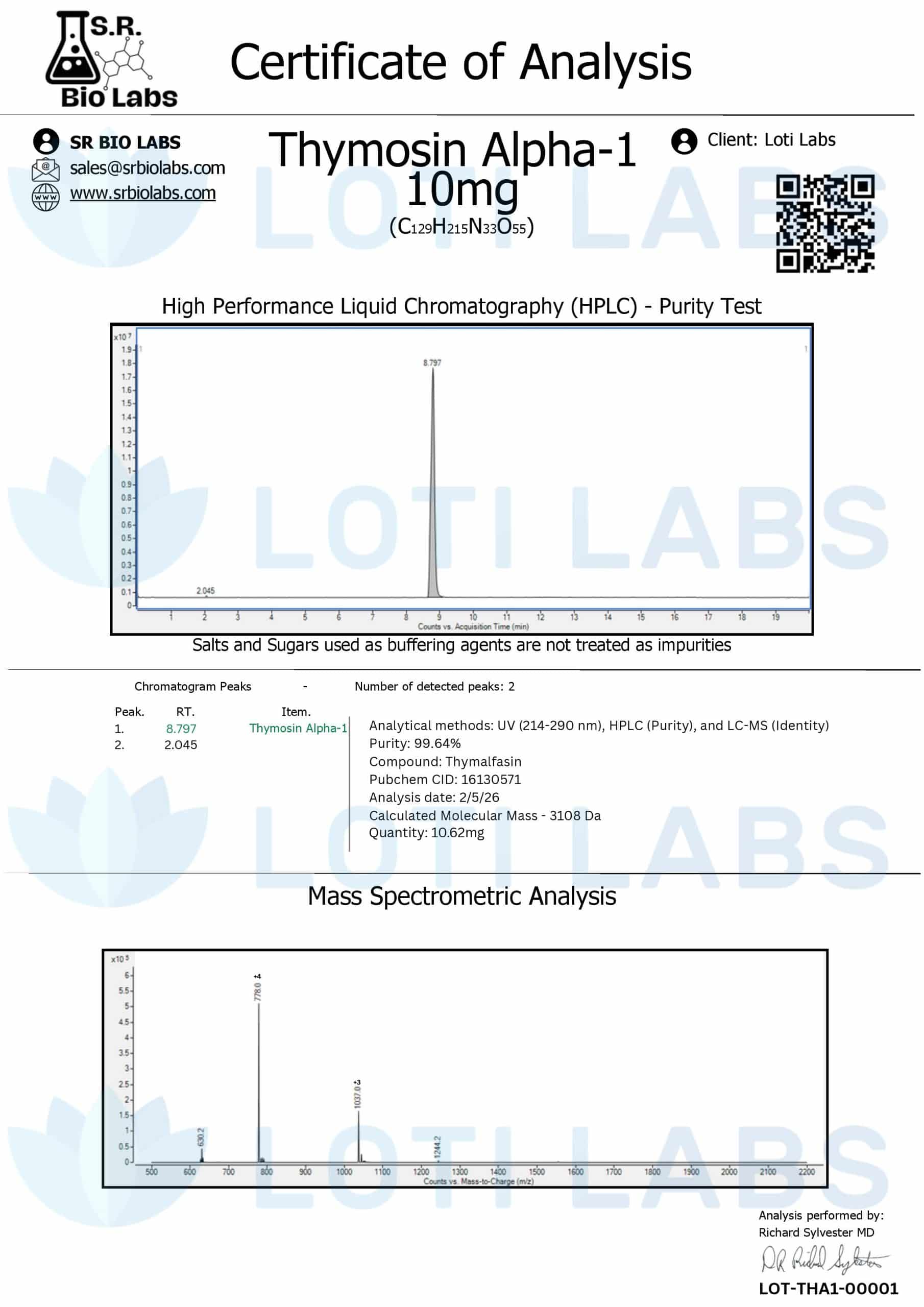
Researchers will find 10mg of synthetic Thymosin Alpha-1 in this vial, provided as a lyophilised powder. This 10mg unit dose is a great fit for multi-experiment research programs or in vitro studies that need higher concentrations. The batch purity has been verified through independent third-party analysis, and certificates of analysis are available for research teams on request.
Intended Use
Thymosin Alpha-1 10mg is supplied for research purposes only. It’s intended for use by qualified laboratory researchers in preclinical and in vitro settings. It isn’t intended for diagnostic, therapeutic, or human administration purposes. It is not intended for human administration or diagnostic use.
References
-
- Goldstein AL, Goldstein AL. “From lab to bedside: emerging clinical applications of thymosin alpha 1.” Expert Opin Biol Ther. 2009;9(5):593–608.
- Romani L, et al. “Thymosin alpha1 activates dendritic cells for antifungal Th1 resistance through Toll-like receptor signalling.” Blood. 2004;103(11):4232–4239.
- Liu F, et al. “Thymosin Alpha-1: A promising approach to cancer treatment.” Eur J Pharmacol. 2021;904:174180.
- Ershler WB. “A case report of thymosin alpha 1 treatment of a primary immunodeficiency disease.” Am J Med Sci. 2003;326(6):367–371.
- Wu J, et al. “Thymosin alpha-1 for severe COVID-19: a systematic review and meta-analysis.” Int Immunopharmacol. 2021;101(Pt A):108143.