GHK-Cu 50mg — Research Overview
GHK-Cu (copper peptide GHK-Cu; glycine-histidine-lysine-copper) is a naturally occurring tripeptide-copper complex that Loren Pickart first isolated from human plasma back in 1973. You’ll find it throughout the body—in plasma, saliva, and urine—though its concentrations drop off significantly as we get older. Levels typically fall from about 200 ng/mL in young adults to around 80 ng/mL by the time someone reaches 60. Because of this age-related decline and the peptide’s documented impact on wound healing, collagen synthesis, anti-inflammatory signalling, and gene regulation, GHK-Cu has become one of the most heavily studied repair-associated peptides in regenerative biology and aging research. This product is for research purposes only and is not intended for human administration; it should only be handled by qualified investigators.
Mechanism of Action
GHK-Cu acts as a copper-binding chelator, creating a stable coordination complex that helps copper work as a cofactor across various enzymatic processes. One of its best-characterised roles involves stimulating collagen, elastin, and glycosaminoglycan synthesis within fibroblasts. It’s driven by the upregulation of TGF-β signalling pathways. In wound healing models, this leads to faster collagen deposition and better tensile strength in the repaired tissue.
GHK-Cu does more than just support structural matrix biology; it’s actually a broad-spectrum gene expression modulator. Genome-wide studies led by Pickart and his team found that GHK-Cu can influence the expression of over 4,000 human genes. These effects usually lean toward restoring a younger gene expression pattern. It works by dampening genes linked to inflammation, oxidative damage, and cancer progression, while simultaneously boosting those involved in tissue maintenance and repair. This systemic ability to regulate genes sets GHK-Cu apart from other peptides that rely on narrower, receptor-specific mechanisms.
Research Context
Most research into GHK-Cu has focused on wound healing and skin biology. Both in vitro and animal studies show it’s consistent at promoting fibroblast proliferation and migration, angiogenesis, and wound contraction. It’s been tested in models of chronic wounds, incisional wounds, and radiation-induced skin damage, seeing positive outcomes across most preclinical contexts. These results have sparked plenty of cosmetic and dermatological interest, even as studies continue to characterise its exact mechanisms more precisely.
In neuro-research, GHK-Cu has been reported to boost the expression of BDNF and VEGF, showing neuroprotective properties in models of oxidative stress and excitotoxicity. Researchers studying how tissue regeneration declines with age often use GHK-Cu alongside Epitalon 10mg and NAD+ 500mg in multi-peptide aging biology panels. These compounds are chosen because they offer complementary but distinct mechanisms of action.
Researchers often study GHK-Cu alongside BPC-157 5mg and TB-500 5mg for musculoskeletal repair. It’s also included in combination formulas like the Glow Blend 70mg and Klow Blend 80mg. These blends pair GHK-Cu with BPC-157, TB-500, and KPV to investigate multi-mechanism tissue repair.
Laboratory Handling
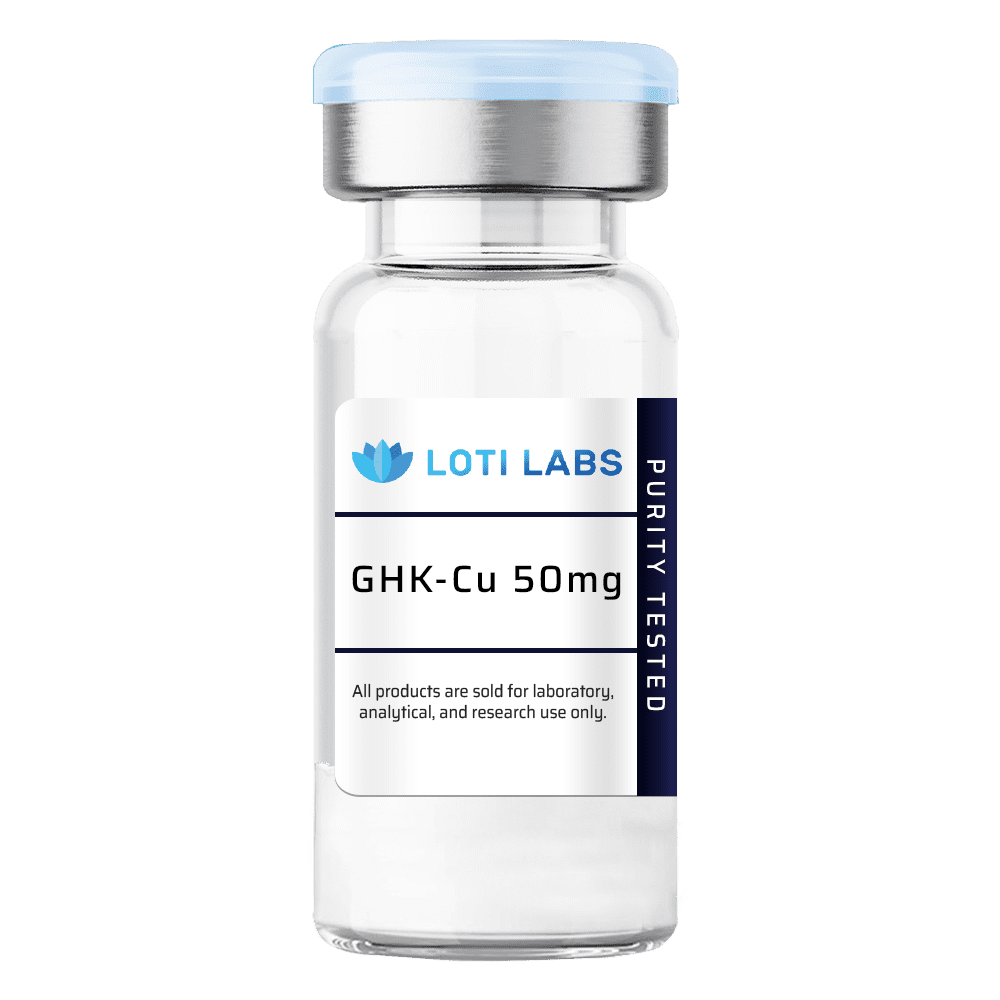
GHK-Cu 50mg comes as a lyophilised powder, usually showing a distinct blue-green tint because of how the copper binds. It’s highly water-soluble and dissolves easily in sterile water or saline. Once you’ve reconstituted it, keep the solution away from light and store it at 4°C. For long-term storage, the lyophilised powder stays best at −20°C. While the copper coordination remains stable at physiological pH, keep in mind that extreme acidic or basic environments can break the complex apart.
For research purposes only. It’s not intended for clinical use or human administration.
References
- Pickart L, Margolina A. Regenerative and protective actions of the GHK-Cu peptide in the light of the new gene data. Int J Mol Sci. 2018;19(7):1987.
- Pickart L, et al. The human tripeptide GHK-Cu in prevention of oxidative stress and degenerative conditions of aging. Rejuvenation Res. 2012;15(2):165–167.
- Gorouhi F, Maibach HI. Role of topical peptides in preventing or treating aged skin. Int J Cosmet Sci. 2009;31(5):327–345.
- Cangul IT, et al. Evaluation of the effects of GHK-Cu on full-thickness incisional wound healing in rabbits. Vet Dermatol. 2004;15(6):375–382.
Comparative Notes
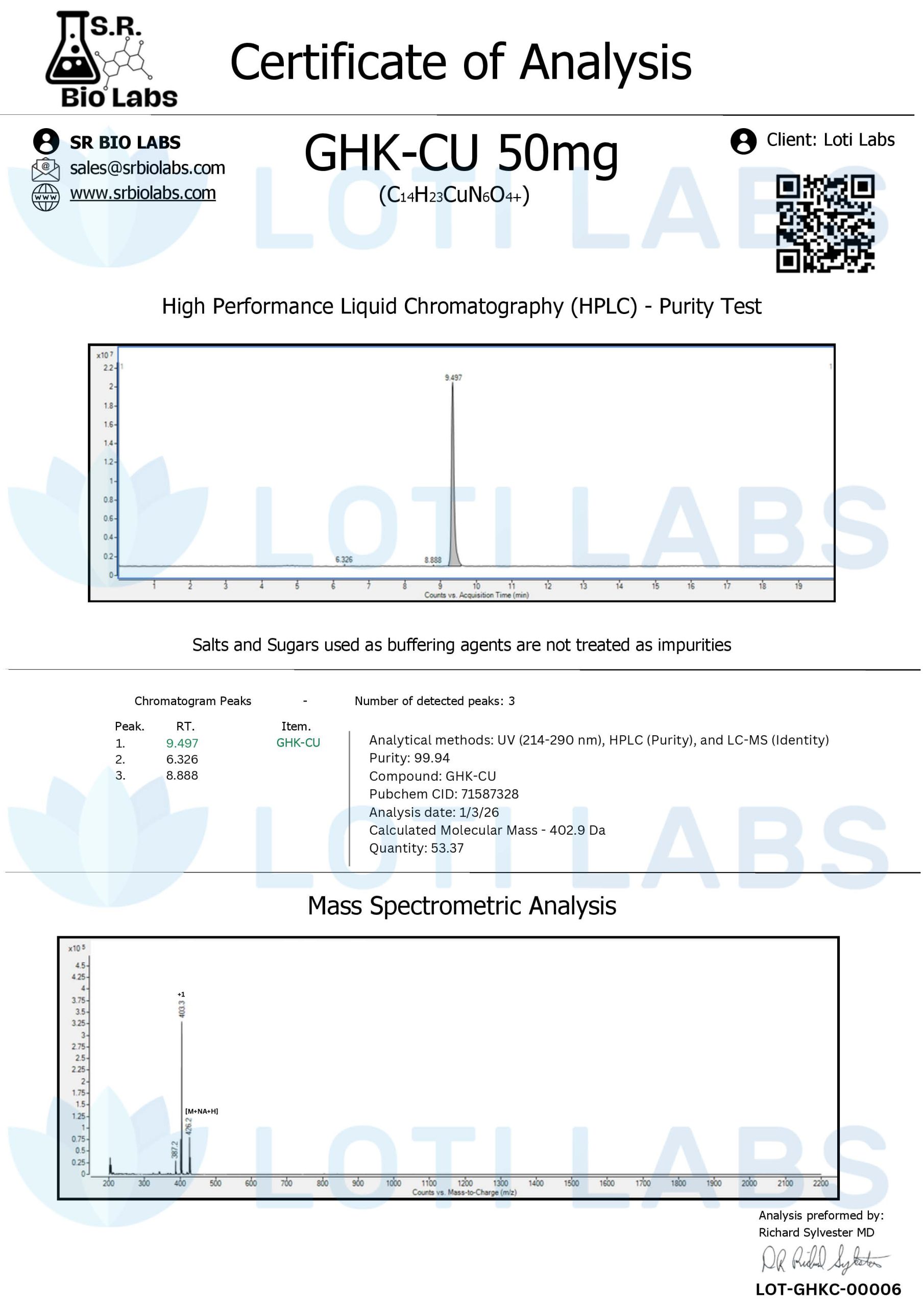
GHK-Cu relies heavily on its copper component for biological activity. Without copper coordination, the tripeptide shows much lower potency in fibroblast-stimulating assays, which suggests the metal complex is necessary to fully engage receptors or targets. It’s important for researchers to verify the copper content and coordination status of their preparations, especially when synthesising or reformulating from individual components. Standard research-grade GHK-Cu preparations usually maintain a 1:1 molar ratio of tripeptide to copper. This is the specific biologically active form characterised throughout existing literature.