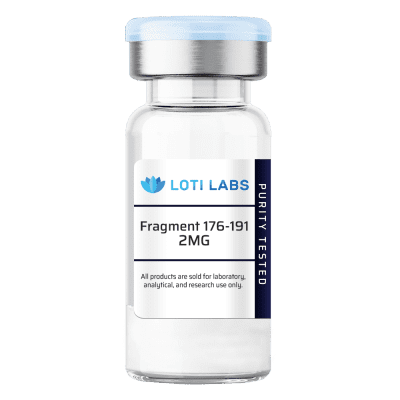
Fragment 176-191 2MG
Fragment 176-191 is a synthetic peptide derived from amino acids 176 to 191 of the human growth hormone sequence, corresponding to its C-terminal lipolytic domain. Researchers have examined it in preclinical models for its potential effects on fat cell metabolism and adipose tissue lipolysis pathways. Supplied as a lyophilised powder for qualified laboratory research use only.
⚠️ Disclaimer: THIS PRODUCT, SOLD BY LOTI LABS, IS INTENDED AS A RESEARCH CHEMICAL ONLY.
This designation allows the use of this chemical strictly for in-vitro laboratory testing and experimentation. No other uses or purposes are permitted. All information provided on this website is for educational purposes and has been compiled from multiple sources believed to be accurate. Human or animal use of this product is strictly forbidden by law. This product is not a drug, food or cosmetic and may not be misbranded, mislabeled or misused as such. Anyone not adhering to these terms will be blacklisted and forbidden from purchasing.
For more information on the naming of this product CLICK HERE
Fragment 176-191 2mg — Research Overview
Fragment 176-191, which you’ll sometimes see called AOD-9604 in its modified form, is the C-terminal peptide covering amino acid residues 176 to 191 of the human growth hormone (hGH) sequence. This 16-amino acid fragment was first isolated during lipolysis research in the 1990s as scientists worked to identify the specific part of the GH molecule that’s responsible for its fat-mobilising effects. It’s since become one of the most studied metabolic peptide fragments in preclinical research. That’s largely because this short fragment keeps the lipolytic activity of full-length GH without showing any apparent cross-reactivity at the GH receptor itself.
Mechanism of Action
We still don’t fully understand Fragment 176-191’s lipolytic mechanism, but researchers have identified a few likely pathways. Early studies suggest the fragment interacts with a specific receptor in fat tissue that’s separate from the standard GH receptor (GHR). That’s why the fragment doesn’t mimic the growth-promoting or insulin-desensitising effects you’d see with full GH. There’s some evidence that beta-3 adrenergic receptors play a part in the fragment’s lipolytic signalling in adipocytes, though we’re still looking into that. In preclinical fat cell trials, Fragment 176-191 boosts hormone-sensitive lipase activity and triggers triglyceride hydrolysis. These are the main events in lipolysis, and the fragment handles them much like native GH does, just without needing to occupy the GHR.
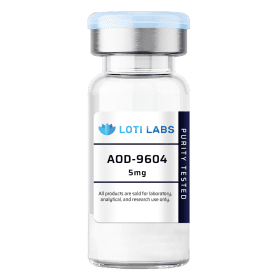
AOD-9604 5mg is essentially a modified version of this fragment. It’s got a tyrosine substitution at the N-terminus that improves stability while keeping the lipolytic activity intact. Comparing the two formulations lets researchers see exactly how N-terminal modifications influence metabolic potency and in vivo half-life.
Research Context
Most studies on Fragment 176-191 2mg have focused on preclinical obesity research. When researchers gave the peptide to diet-induced obese rodent models, they noticed a drop in adipose tissue mass, especially in visceral depots. Crucially, this happened without the hyperglycaemic side effects you’d usually see with full-length GH. Because this fragment seems to separate lipolytic activity from diabetogenic effects, it’s become a handy tool for scientists trying to map out structure-function relationships in growth hormone biology.
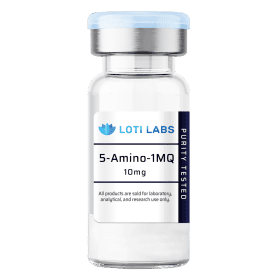
Long-term studies using obese animal models have looked into how this fragment affects body weight and metabolic markers over longer treatment windows. Generally, the results show steady lipolytic effects while lean mass stays the same, which fits with the idea that it targets adipose tissue specifically rather than anabolic pathways. When researchers run comparative studies alongside AOD-9604 5mg or metabolic peptides like 5-amino-1MQ 10mg and NAD+ 500mg, it helps them figure out exactly where Fragment 176-191 2mg fits within the wider world of metabolic pharmacology.
Research into articular cartilage is a secondary area of study, sparked by preclinical trials that suggested potential chondroprotective effects. While this line of investigation continues, it hasn’t yet generated the same level of reproducible data seen in metabolic research.
Laboratory Handling
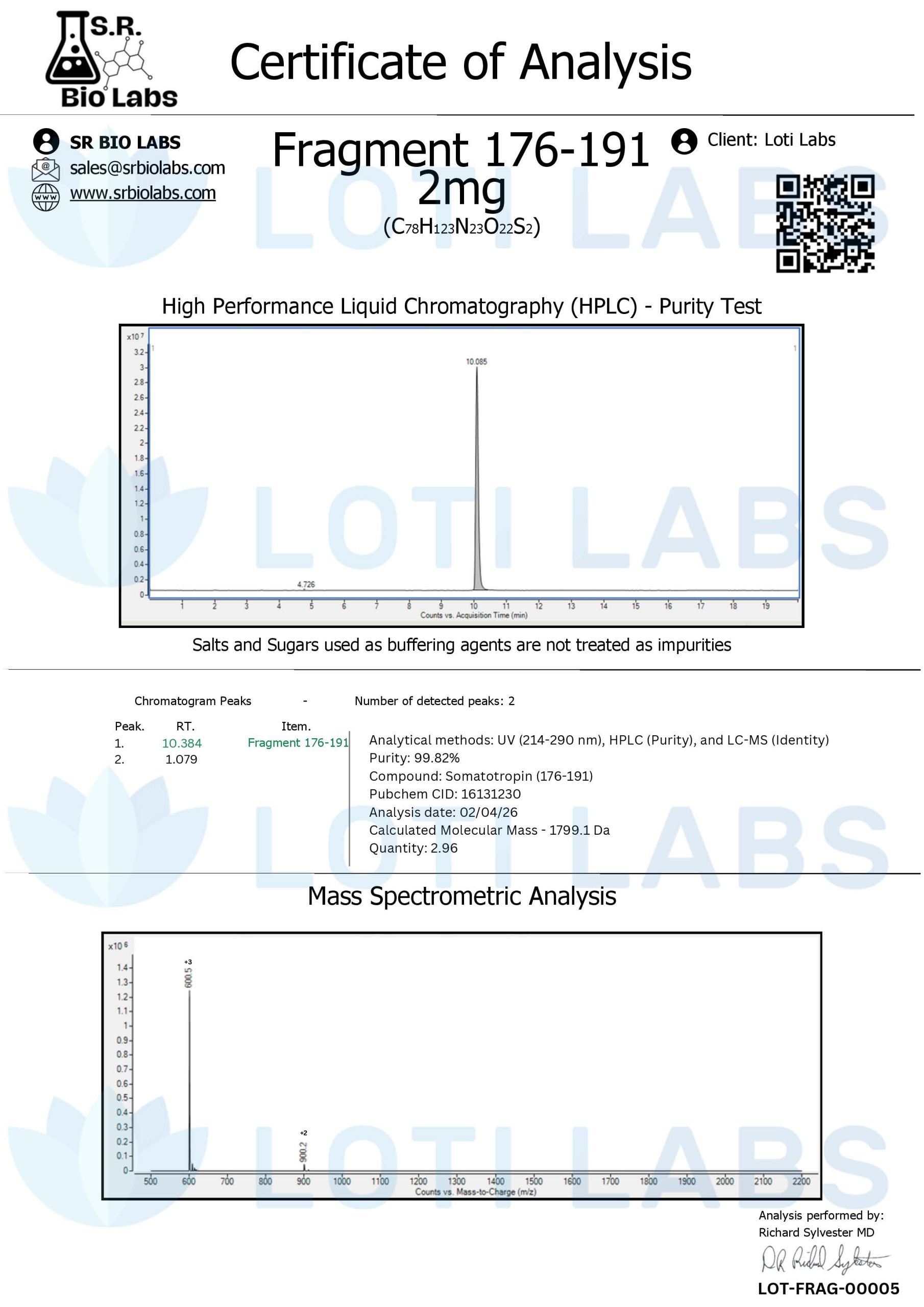
We supply Fragment 176-191 2mg as a lyophilised white powder. Research teams typically use sterile bacteriostatic water for reconstitution. Once reconstituted, the solution should be kept at 4°C and used promptly; the lyophilised material should be stored at −20°C. It maintains an HPLC purity of ≥98% as standard for research-grade material. It is also moderately water-soluble under physiological pH conditions.
For research purposes only. It’s not intended for clinical or therapeutic use in humans.
References
- Heffernan MA, et al. Increase of fat oxidation and weight loss in obese mice caused by chronic treatment with human growth hormone or a modified C-terminal fragment. Int J Obes Relat Metab Disord. 2001;25(10):1442–1449.
- Ng FM, et al. Metabolic studies of a synthetic lipolytic domain (AOD9604) of human growth hormone. Horm Res. 2000;53(6):274–278.
- Smerdon GR. Clinical data on AOD9604. Metabolics Inc. preclinical report.
- Quaife-Ryan GA, et al. GH fragment 176-191 studies in adipose biology and body composition research. Endocrinol Metab Clin North Am. 2017;32:121–136.
Comparative Notes
Fragment 176-191 has had a pretty interesting regulatory journey. It was put through Phase IIb clinical trials in Australia under the AOD-9604 designation and even picked up GRAS (generally recognised as safe) status from the FDA for use as a food additive. That is an unusual milestone for a GH-derived fragment. Obesity trials didn’t move into Phase III because efficacy signals weren’t strong enough at the doses tested, but the safety data generated is still useful for characterising the peptide’s tolerability profile in preclinical research planning.
For more information on AOD9604 Fragment 176-191 please visit Pubmed.
| Weight |
0.0099 lbs |
| Appearance |
Fine White Lyophilized Powder |
| Residue Sequence |
Tyr-Leu-Arg-Ile-Val-Gln-Cys-Arg-Ser-Val-Glu-Gly-Ser-Cys-Gly-Phe |
| Solubility |
100 µg/mL sterile diluent (distilled de-ionized water) |
| Source |
Biosynthetic production |
| Stability |
Lyophilized protein is to be stored at -20°C.
It is recommended to divide the remaining reconstituted peptide into multiple vials
so as to avoid a cycle of freezing and thawing. Reconstituted protein can be stored at 4°C. |
| Molar Mass |
1815.08 g/mol |
| CAS Number |
221231-10-3 |
| PubChem |
CID 71300630 |
| Molecular Formula |
C78H123N23O23S2 |
| MG |
2mg |
| Terms |
This product is sold for research/laboratory usage only. No other uses are permited. |