BPC-157 5mg — Research Overview
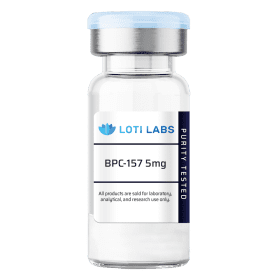
BPC-157 (Body Protective Compound 157) is a synthetic pentadecapeptide made of 15 amino acids: Gly-Glu-Pro-Pro-Pro-Gly-Lys-Pro-Ala-Asp-Asp-Ala-Gly-Leu-Val. It’s derived from a partial sequence of human gastric juice protein BPC. Researchers first characterised the peptide in the early 1990s, and it’s since built up one of the most extensive bodies of preclinical literature in the field. Studies across gastrointestinal, musculoskeletal, neurological, vascular, and inflammatory models consistently show BPC-157 acts as a pleiotropic compound. It demonstrates clear regenerative and cytoprotective properties across many different tissue types. This product is for research purposes only and is not intended for human administration; it should only be handled by qualified investigators.
Mechanism of Action
We don’t fully understand BPC-157’s mechanisms yet, which is exactly why it’s still such a focus for researchers. So far, we’ve identified several converging pathways. In vascular biology, the peptide seems to modulate nitric oxide synthesis, driving angiogenesis by upregulating eNOS and subsequent NO production. In tendon and ligament injury models, BPC-157 speeds up growth factor expression—specifically VEGF, EGF, and tenascin—within fibroblasts and tenocytes, helping with extracellular matrix remodelling and cellular migration into damaged tissue.
BPC-157 also interacts with the dopaminergic, serotonergic, and GABAergic systems in the CNS, where it’s shown anxiolytic and neuroprotective effects in rodent behavioural models. It seems to modulate vagus nerve function, too. There’s evidence suggesting its GI and systemic effects are partly mediated through vagal afferent signalling—a research thread that links its local GI protective actions directly to its systemic effects.
Research Context
In GI research, BPC-157 has been studied in models of gastric ulcers, inflammatory bowel disease, and intestinal anastomosis healing. Across these models, BPC-157 administration is consistently linked to faster healing, reduced inflammatory histology, and preserved mucosal architecture. These findings point to a cytoprotective role in the GI epithelium. It isn’t surprising, really, since BPC is endogenously found in gastric juice and likely serves a natural protective function against mucosal injury. This research is for research purposes only and is not intended for human administration; it should only be handled by qualified investigators.
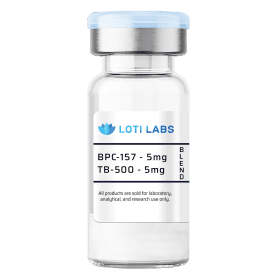
Researchers have used BPC-157 to study musculoskeletal healing in rodent models involving tendon transections, muscle crushes, ligament injuries, and bone fractures. In most of these cases, animals treated with BPC-157 show a faster recovery of tensile strength and histological organisation than the control groups. When comparing BPC-157 with TB-500 5mg and MGF 2mg in musculoskeletal models, scientists often find their effects are complementary rather than redundant, which makes sense given their distinct mechanisms. Both the BPC-157 / TB-500 Blend and Klow Blend formulations are frequently used in studies looking at combined tissue repair strategies.
Researchers have explored BPC-157’s neurological applications in models of traumatic brain injury, peripheral nerve crush, and neurotoxin exposure. In several of these models, BPC-157 reduced neurological deficits and sped up functional recovery. These effects are linked to its neuroprotective, anti-inflammatory, and vascular-promoting properties. This peptide is for research purposes only and is not intended for human administration; it should only be handled by qualified investigators.
Laboratory Handling
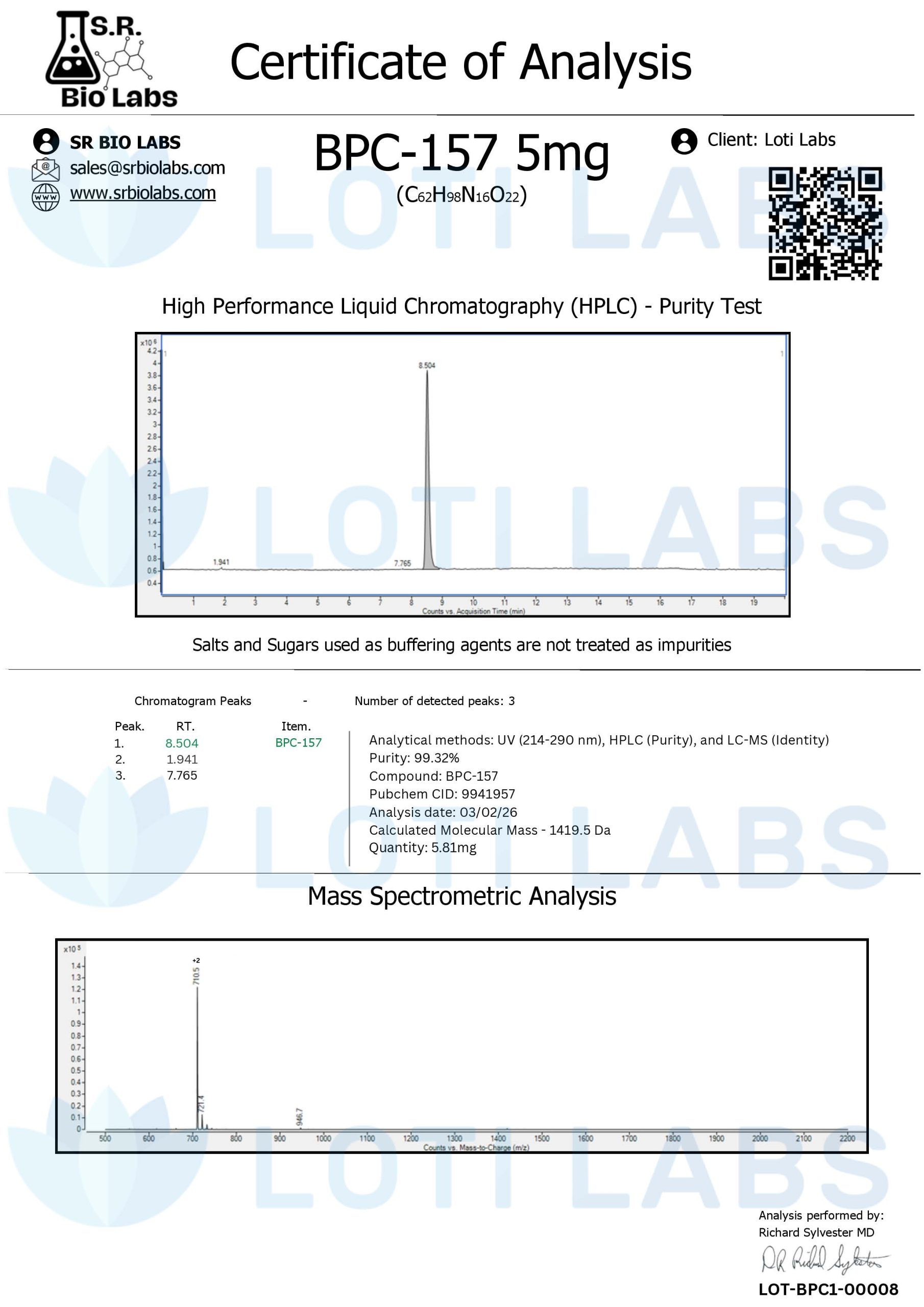
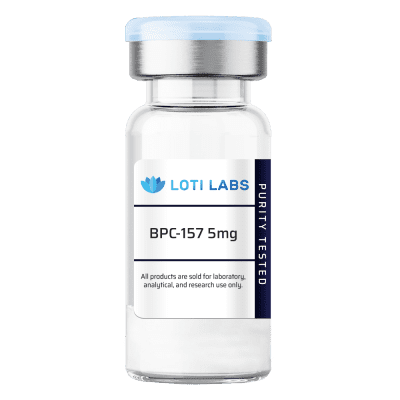
We supply BPC-157 5mg as a lyophilised powder, verified at ≥98% purity via HPLC. You’ll typically reconstitute it using sterile bacteriostatic water, though sterile saline works for acute systemic preparations. After you’ve reconstituted the peptide, keep the solution at 4°C and use it promptly. If you need to store it longer, freezing aliquots at −20°C is the best approach. BPC-157 is water-soluble and remarkably stable, so it’s easy to handle under standard laboratory conditions. This product is for research purposes only and is not intended for human administration; it should only be handled by qualified investigators.
For research purposes only. Not intended for human clinical use or therapeutic administration.
References
- Sikiric P, et al. Brain-gut axis and pentadecapeptide BPC 157: theoretical and practical implications. Curr Neuropharmacol. 2016;14(8):857–865.
- Gwyer D, et al. Gastric pentadecapeptide body protection compound BPC 157 and its role in accelerating musculoskeletal soft tissue healing. Cell Tissue Res. 2019;377(2):153–159.
- Hsieh MJ, et al. Therapeutic potential of pro-angiogenic BPC157 is associated with VEGFR2 activation and up-regulation. J Mol Med (Berl). 2017;95(3):323–333.
- Sikiric P, et al. Stable gastric pentadecapeptide BPC 157: novel therapy in gastrointestinal tract. Curr Pharm Des. 2011;17(16):1612–1632.
Comparative Notes
Researchers often ask if BPC-157’s effects depend on growth hormone—specifically, whether it needs an intact GH/IGF-1 axis to trigger tissue repair. Studies using hypophysectomised animals, which have no pituitary output, show that many of BPC-157’s healing properties persist even without GH. This suggests the peptide works through direct mechanisms rather than just stimulating the GH axis. It is a key distinction from growth hormone secretagogues or GHRH analogues that require functional pituitaries to work. Because of this, BPC-157 is a versatile research tool, especially in models where the somatotropic axis is compromised. This product is for research purposes only and is not intended for human administration; it should only be handled by qualified investigators.
For more information on BPC-157 visit Wikipedia