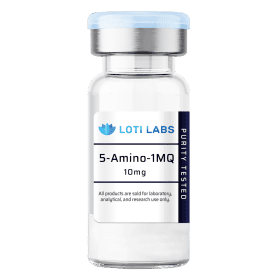
5-amino-1MQ 10mg — Overview
5-amino-1MQ (5-amino-1-methylquinolinium) is a small-molecule compound that’s seen a surge in research interest due to its ability to inhibit nicotinamide N-methyltransferase, or NNMT. This enzyme is a major factor in cellular energy metabolism and, as recent work suggests, adipogenesis. It isn’t a peptide in the traditional sense, but it’s frequently grouped with peptide-based metabolic research compounds. That’s because its downstream effects cross over into the same pathways explored by researchers investigating obesity, metabolic syndrome, and energy homeostasis.
The NNMT Pathway
NNMT is a methyltransferase enzyme found at high levels in liver and adipose tissue. It methylates nicotinamide (a form of vitamin B3), which reduces the availability of S-adenosylmethionine (SAM)—the body’s primary methyl donor—and drains the NAD+ pool. This creates a metabolic state that promotes fat accumulation and reduces mitochondrial efficiency. High NNMT activity’s been consistently linked to obesity and metabolic dysfunction in both animal models and human tissue studies.
By blocking NNMT, 5-amino-1MQ bumps up intracellular SAM concentrations and makes more NAD+ available. This shift seems to push adipocytes toward a more metabolically active phenotype—often called “beige” or “brite” adipocyte activation—which is linked to lower lipid accumulation in in vitro fat cell models.
Research Findings
Researchers have mostly looked at this molecule in rodent obesity models. When testing mice on high-fat diets, inhibiting NNMT with 5-amino-1MQ dropped their fat mass even though they didn’t eat any less. It suggests the effect comes from burning more energy, not just suppressing the appetite. That is a key detail for anyone modelling weight loss pathways; metabolic acceleration that doesn’t rely on appetite is a different, and likely more complex, phenomenon than simple caloric restriction.
A few research teams have also looked at downstream effects on skeletal muscle metabolism and insulin sensitivity. Since NAD+ is central to mitochondrial function—it is a key coenzyme in the electron transport chain—boosting its availability via NNMT inhibition might have metabolic implications that go well beyond adipose tissue. This links 5-amino-1MQ research to the broader study of NAD+ supplementation. Researchers often compare it with direct precursor approaches using compounds like NAD+ 500mg to see which intervention point works best for a specific endpoint.
Synergistic Research Applications
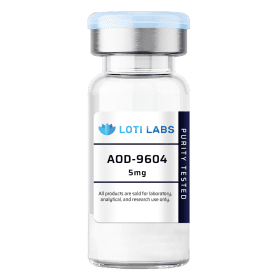
Because of how it works, researchers often study 5-amino-1MQ alongside GH-axis peptides. For example, AOD-9604 5mg targets adipose β3-adrenergic receptors to trigger lipolysis, whereas 5-amino-1MQ functions upstream at an epigenetic and enzymatic level. This lets investigators look at different layers of the same metabolic system simultaneously. Tesamorelin 10mg also has well-documented effects on visceral fat in clinical environments, making it another useful comparator for studies involving multiple metabolic mechanisms.
Labs focusing on mitochondrial biology might find that MOTS-c 10mg offers some interesting synergies. It is a mitochondrial-derived peptide that regulates nuclear gene expression linked to metabolic stress and glucose metabolism.
Format & Quality
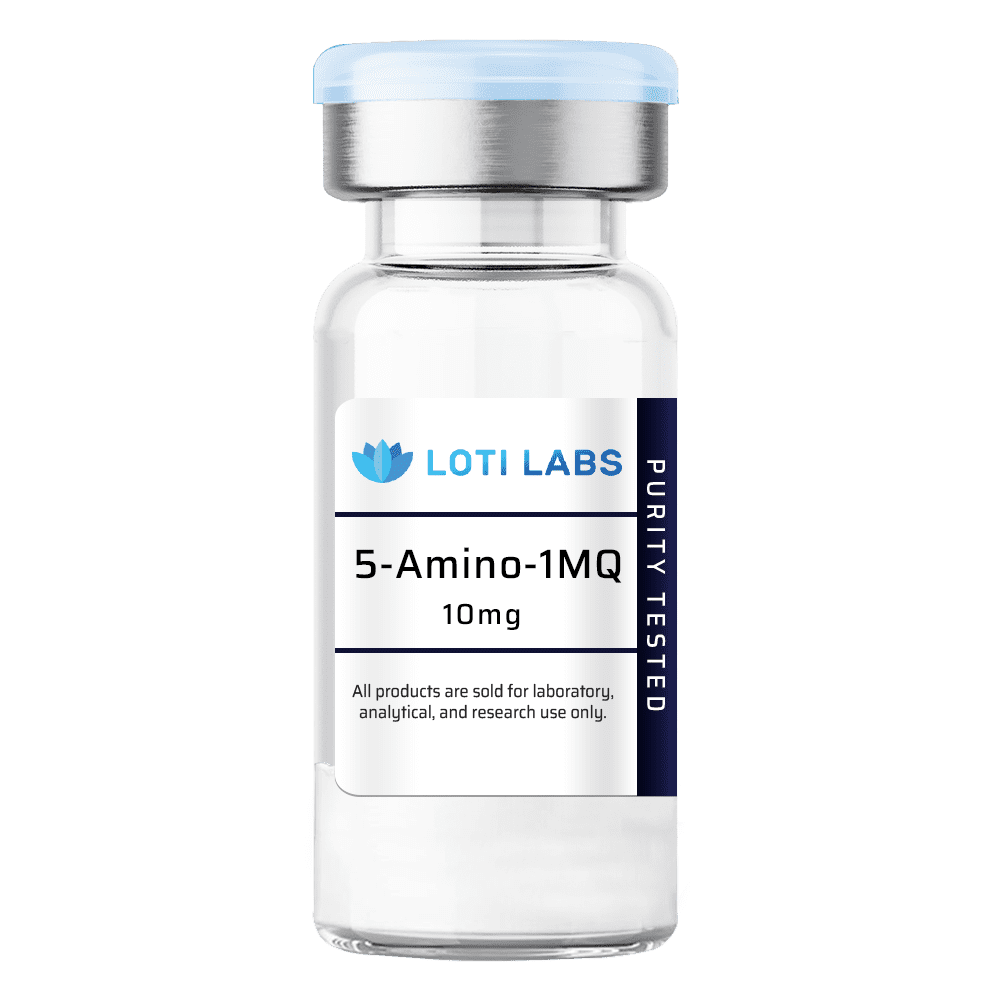
You’ll find 10mg of 5-amino-1MQ in this vial, supplied as a solid powder. It’s generally stable in its dry state if kept in cool, dry storage. Since it is a small molecule and not a full peptide, reconstitution protocols differ from typical lyophilised peptides. Researchers should consult the literature and their own institutional protocols for the right solvent selection and concentration preparation.
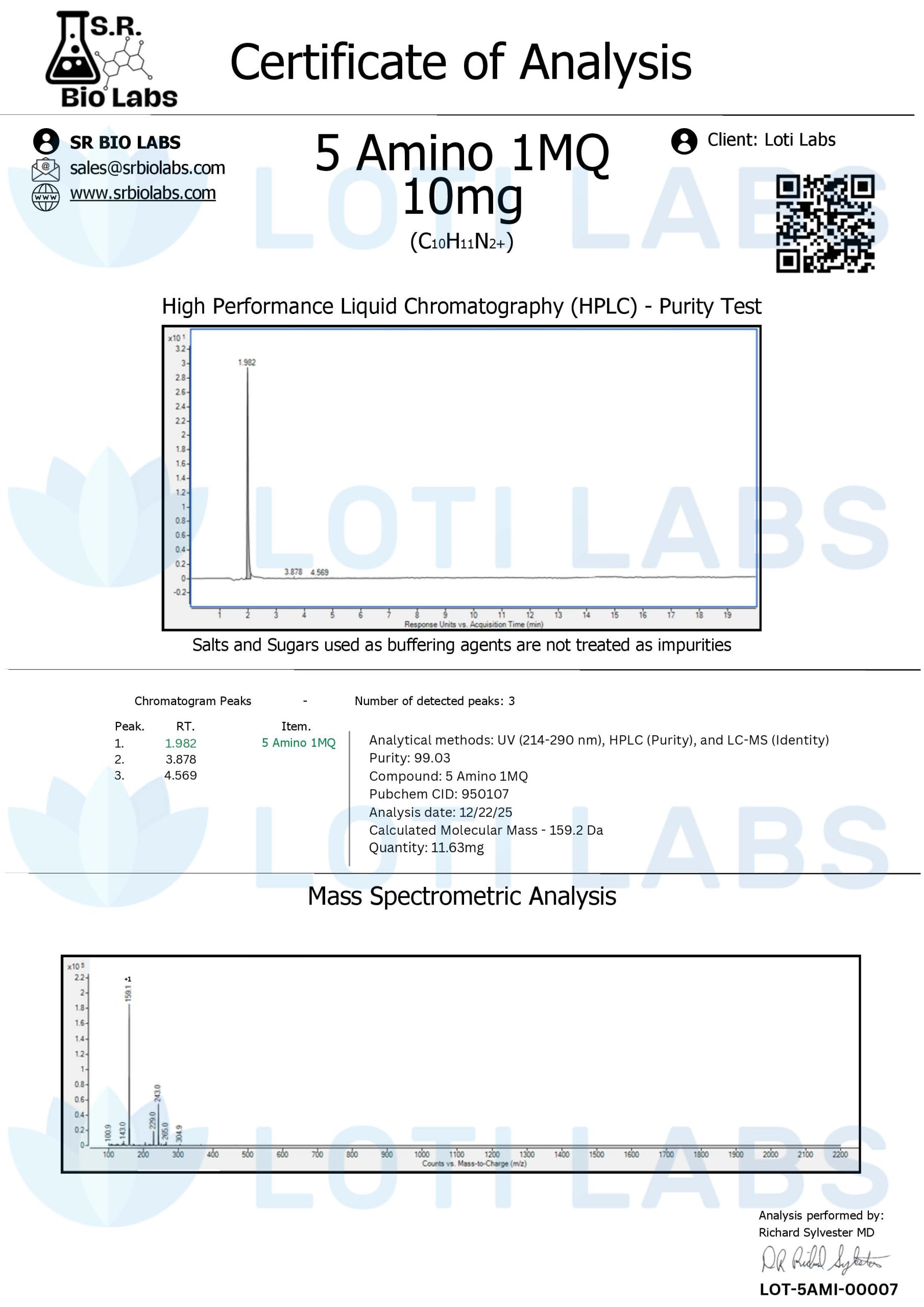
Like every compound in our catalogue, batch identity and purity are independently verified before release. Researchers can request the documentation whenever required; it is a necessary part of any rigorous experimental record.
Intended Use
5-amino-1MQ 10mg is supplied for research purposes only. It’s intended exclusively for laboratory and in vitro or preclinical research use by qualified investigators and isn’t intended for human administration.
References
- Kasbekar M, et al. “NNMT inhibition activates thermogenic adipose tissue and reduces adiposity.” Cell Metab. 2023;35(9):1568–1581.
- Kannt A, et al. “Inhibition of nicotinamide-N-methyltransferase (NNMT) in adipose tissue increases NAD+ and SAM pools and prevents diet-induced obesity.” Sci Rep. 2018;8(1):3660.
- Kraus D, et al. “Nicotinamide N-methyltransferase knockdown protects against diet-induced obesity.” Nature. 2014;508(7495):258–262.
- Hong S, et al. “Nicotinamide N-methyltransferase regulates hepatic nutrient metabolism through Sirt1 protein stabilization.” Nat Med. 2015;21(8):887–894.